


How Do Jewish Sober Living Homes Work?
January 14, 2025

Alcohol and drug addiction often go deeper than what people see on the surface, and they affect the mind, body, and soul. Recovery from these addictions is not just about stopping substance use, but it is about rebuilding a life that has purpose and hope.
This journey can feel very personal for the people trying to get sober, and for some, their faith and culture become important parts of this change. It is where Jewish sober living homes offer a special way to recover that combines the principles of sobriety with the spiritual and cultural values of Judaism.
But how do these homes work, and what makes them different from other recovery places? Understanding Jewish sober living homes can show you how healing and heritage work together.
In this post, we will explain how these homes help people by building a sense of community and offer a structure that uses Jewish traditions to support long-term sobriety. So, let us get started.
What Are Sober Living Homes?
Sober-living homes are safe and supportive places that help people transition from addiction treatment to independent living. These facilities offer a structured environment where people can stay sober and build life skills while getting a solid foundation for their recovery journey.

They are not treatment centers, but they do offer a place where people can live with others who are also working on being sober. Residents usually follow house rules and participate in the home chores or responsibilities. These homes are great for people who need a little extra support as they re-enter society and keep working on their recovery.
How do Jewish sober living homes work?
1. A Safe and Structured Environment
Traditional sober living homes may not always be the best fit for Jewish individuals in recovery due to cultural and communal differences. It is where Jewish sober homes provide a safe and structured environment for individuals recovering from addiction. These homes are substance-free and focus on promoting sobriety.

2. Jewish Values and Spiritual Practices
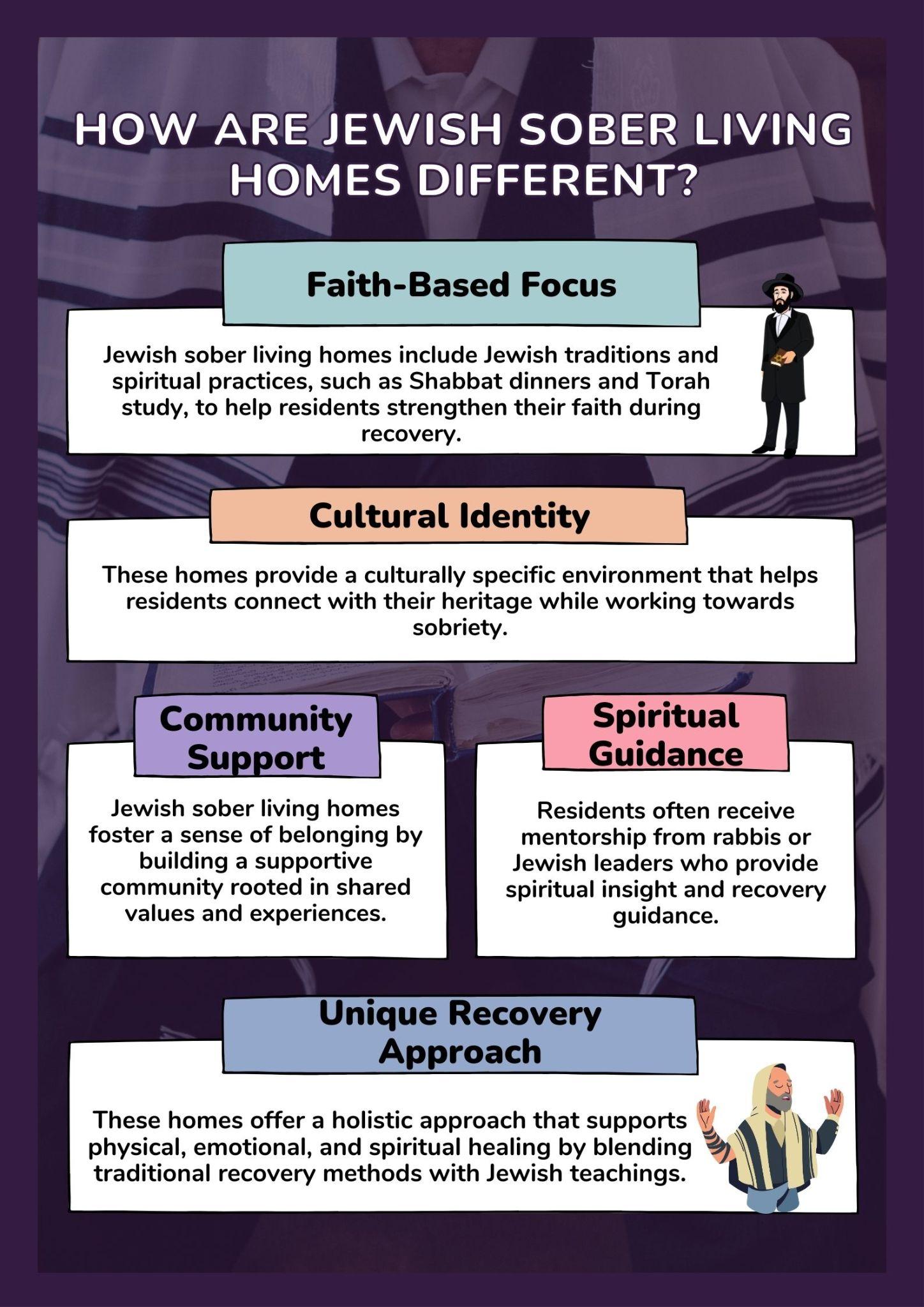
A key feature of Jewish sober living homes is the integration of Jewish values and spiritual practices. Residents may participate in Shabbat dinners, attend Torah study sessions or engage in prayer services. These practices help residents to strengthen their spiritual connection.
3. Community and Peer Support
Living with others who understand the challenges of recovery creates a strong sense of community. Jewish sober living homes help people support each other by encouraging residents to talk about their experiences, celebrate important events in their lives, and build strong relationships. This helps people to feel less alone and more likely to stay sober.
4. Focus on Long-Term Sobriety
These homes help people to stay sober for a long time by teaching them important life skills. People living here can learn how to manage everyday tasks like budgeting, cooking, and finding a job. This helps them prepare for living on their own while staying focused on their recovery.
5. Recovery Meetings and Counseling
Many Jewish sober living homes encourage or require participation in recovery programs like Alcoholics Anonymous or Narcotics Anonymous. They may also provide access to Jewish-specific recovery groups such as JACS (Jewish Alcoholics, Chemically Dependent Persons, and Big Others). Counselling services here are tailored to the Jewish faith and may be available to address individual needs.

6. Adherence to House Rules
People living here have to follow the house rules, and these rules make sure everyone respects each other and the environment. This often includes things like attending group meetings and taking part in housework. These rules help to make sure that everyone is responsible and follows the rules, which is important for getting better.
7. Emphasis on Holistic Healing
Jewish sober living homes focus on healing the mind, body and spirit. People living there might do things like yoga, meditation, art therapy, and spiritual practices. This kind of care looks at the whole person and helps them deal with the emotional and psychological parts of recovering from addiction.
Conclusion:
Personal values and cultural identity can play a big role in any recovery process. That is why Jewish sober living homes in Florida create an environment where individuals can find their spirituality again and rebuild their lives in a supportive community.
These homes show how shared values can bring people together and help them change their lives. They are proof of how strong the human spirit can be and how faith and belonging can help someone on their recovery journey.
Connect with us if you are looking for a substance-free life. Feel free to reach out with any questions about our different programs — we would love to talk to you about your options.
Start your journey to health and comfort at Rocklay Sober Living Homes in Florida. Search us on Google to begin today.
Contact us now >> 561-917-8355
FAQs:
How are Jewish sober living homes different from regular sober living homes?
Jewish sober living homes integrate Jewish customs, such as Shabbat dinners, prayer, and Torah study, into the recovery process. They offer a culturally specific environment that blends spiritual healing with addiction recovery support.
Who can live in a Jewish sober living home?
Jewish sober living homes are open to individuals recovering from addiction who seek a faith-based approach to sobriety. While most residents are Jewish, some homes may welcome individuals of other faiths who respect Jewish traditions.
Do residents have to follow house rules?
Yes, residents here have to follow house rules to maintain a structured and supportive environment. These rules often include curfews, participation in group meetings, and fulfilling household chores.
How does spirituality play a role in recovery in Jewish sober living homes?
Spirituality is a key part of recovery in Jewish sober living homes. Activities such as prayer, Torah study, and observing Jewish holidays provide a sense of purpose and connection that supports emotional and mental well-being.


