


Building Strong Habits: How a Jewish Sober Program in Florida Encourages Routine and Responsibility
January 13, 2026
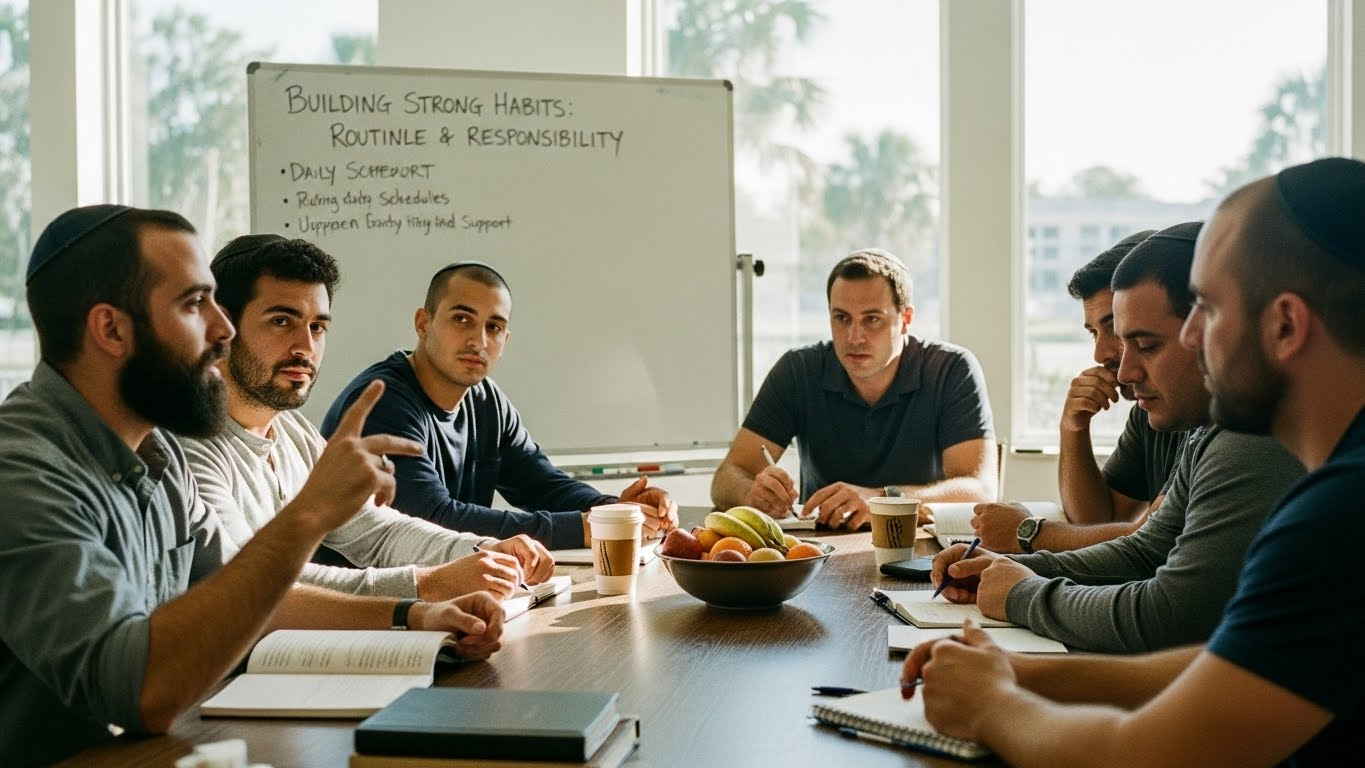
Getting sober is a powerful first step and is an achievement in its own right. Consistency and staying sober are where the real challenge comes in. Usually, it comes down to something less dramatic but more dependable – following a routine. When your day has structure, your cravings have fewer moments to get the better of you. For recovering addicts seeking structured support in Florida, Jewish sober living in Delray Beach adds an extra layer of support by pairing clinical care with cultural familiarity, community, and value-based living.
In this guide, you’ll learn how habits are built in early recovery, how responsibility becomes a daily practice, and what routine can look like inside a Jewish sober program in Florida.
Why Habit-Building Matters in Early Sobriety
Addiction and the Routine Gap
Substance use tends to replace predictable rhythms with chaos. Sleep gets erratic, meals become random, relationships run on apologies, and priorities shrink down to the next escape. That routine gap is dangerous because it leaves long stretches of unplanned time, which often becomes relapse territory.
Willpower helps, but it is not a strategy. Systems are. Early recovery improves faster when you rely on schedules, reminders, and supportive people instead of trying to “feel motivated” every day.
Habits Reduce Decision Fatigue and Cravings

Cravings often spike when you’re tired, hungry, lonely, overwhelmed, or bored. A consistent routine lowers those trigger states and reduces the number of decisions you have to negotiate when stress levels are high.
A few small routines that make a big difference:
- Fixed wake-up and bedtime to stabilize mood and energy
- Regular meals and hydration to avoid emotional “crashes”
- A daily check-in with a peer, sponsor, or therapist
- A planned “shutdown” ritual at night (phone off, shower, journal)
This is one reason many people look for faith-based addiction treatment in Florida. The goal is not only abstinence, but a calmer, more ordered life that supports it.
Responsibility Restores Self-Trust
Addiction erodes self-trust because promises get broken. Responsibility is how you rebuild credibility with yourself. Not through grand gestures, but through small commitments you keep repeatedly.
In structured treatment settings such as Jewish sober living in Delray Beach, accountability also speeds progress. You practice showing up on time, speaking honestly, completing assignments, and repairing missteps quickly. Over time, your brain starts to expect follow-through, which becomes a new normal.
How a Jewish Sober Program in Florida Builds Routine Through Community and Tradition
Rhythms of Jewish Life that Naturally Support Structure
A Jewish sober program in Florida can make routine feel less like a punishment and more like a meaningful rhythm. Weekly cycles, daily reflection, and community gatherings offer built-in anchors that many people find stabilizing.
Common routine supports can include:
- Shabbat-inspired boundaries that encourage rest and reset
- Prayer, meditation, or quiet reflection as a consistent daily pause
- Gratitude practices that shift attention away from shame and toward growth
- Community connection that reduces isolation, especially in early sobriety
Those searching for a Jewish sober living in Boynton Beach often want practical alignment too, like food considerations and cultural understanding, so day-to-day life feels supportive rather than friction-filled.
Values-Driven Accountability – Having a Cheshbon Hanefesh Mindset

Cheshbon hanefesh, a personal “accounting of the soul,” maps beautifully onto recovery work. It encourages honest review without spiraling into self-attack. As a routine, it can look like a short daily inventory:
- What triggered me today?
- What did I avoid that I need to face?
- What choice am I proud of?
- Who do I owe an apology or a thank you?
That kind of structured self-reflection turns values into behavior. It is not just inspiration. It is repetition, which is where change actually sticks.
Belonging, Identity, and Peer Reinforcement
Recovery is hard alone. It becomes more doable in a community setting, especially when that community is supportive and relatable. A culturally aligned Jewish addiction recovery program can reduce the pressure of adjusting to an unfamiliar setting, all while you’re already doing the heavy work of healing.
Group norms matter more than people think: showing up, participating, doing service, and following through. Those norms quietly teach responsibility which supports momentum when motivation dips.
Routine Plus Responsibility Inside Treatment: What to Expect in a Jewish Rehab Approach

A Structured Day That Strengthens Recovery
A practical Jewish rehab program usually combines evidence-based clinical care with a steady daily framework. Many programs follow a predictable routine – therapy blocks, group work, wellness, meals, and consistent sleep. That structure is not rigid for the sake of control. It helps regulate the nervous system, which is often dysregulated after prolonged substance use. That is a quiet but real form of healing.
Skills That Turn Routines into Lasting Habits
A results-oriented Jewish Drug Rehab Program should teach practical tools that outlive the program itself. Look for skills like:
- Habit stacking (adding one small habit onto an existing one)
- Cue-routine-reward planning (so triggers become predictable)
- Relapse-prevention mapping (people, places, feelings, and exits)
- Coping tools like urge surfing, grounding, and clean communication scripts
If you can name your trigger and follow a script, you can interrupt the relapse pathway.
Responsibility Training Without Shame
A Jewish rehab program helps set clear expectations, offers progressive privileges, and focuses on realignment after setbacks. You may also practice life skills that support independence, including:
- Time management and weekly planning
- Budgeting basics and bill schedules
- Boundary-setting with friends, family, and social groups
- Transition planning into sober housing when that’s the right fit
Conclusion
Long-term sobriety tends to follow a simple pattern: structure your days, lean on community, and practice responsibility until it becomes natural. A Jewish sober program in Florida can make that process more supportive by blending clinical recovery tools with tradition, identity, and belonging.
If you’re exploring options for Jewish sober living in Boynton Beach, confirm a program fits your needs and values.Rocklay Recovery can help you evaluate next steps, build a stable routine, and stay accountable with the right level of support.
Reach out today and take the next practical step toward a life you can rely on.
FAQs
1. What makes a Jewish sober program in Florida different from a general recovery program?
A Jewish sober program in Florida often combines evidence-based treatment with culturally familiar community, values-based accountability, and supportive traditions that strengthen daily structure.
2. Is a Jewish rehab program appropriate if I’m culturally Jewish but not religious?
Yes. Many people choose Jewish rehab for cultural comfort, community connection, and an identity-affirming environment, not necessarily for religious observance.
3. How does routine actually reduce relapse risk during early sobriety?
Routine lowers decision fatigue, stabilizes sleep and mood, and reduces unplanned time, which together cuts down common relapse triggers and impulsive choices.


