


How Long Should You Stay in Sober Living After a Jewish and Kosher Drug Rehab Program?
July 31, 2026
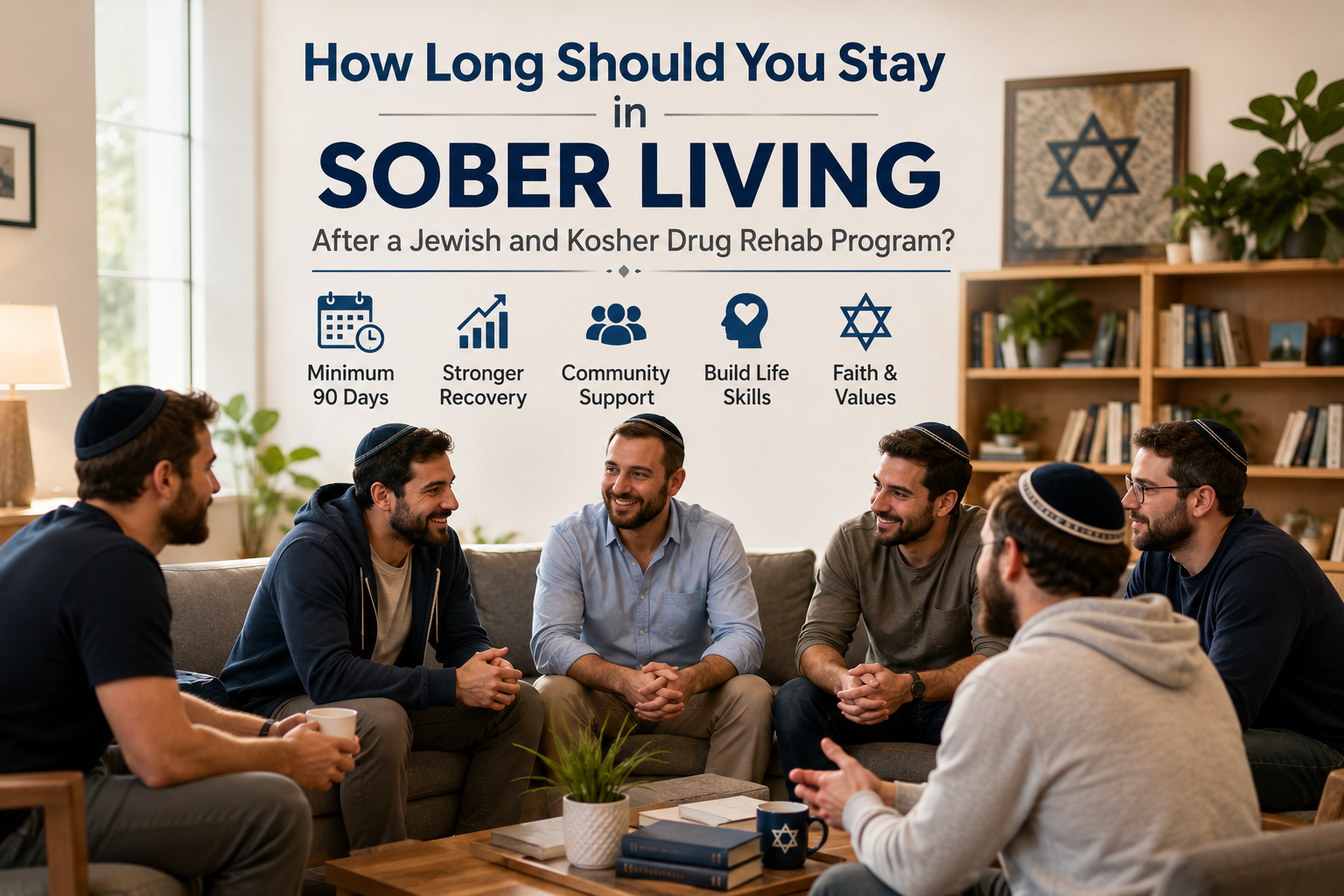
Rehab ends. Then what? Nobody really warns you about this part. You finish treatment, you feel steady, maybe even proud. Then someone hands you a bag and says “you’re free to go.” Free to go where? Back to the same kitchen, the same family tension, the same Friday night table where wine gets poured without anyone thinking twice?
That’s exactly why sober living exists. Not as punishment, not as extra homework. It’s the bridge between “I got sober in a program” and “I can actually live sober, on my own, out in the real world.” For someone leaving a Jewish Rehab program, that bridge has a few extra planks. You’re not only relearning how to live without a substance. You’re relearning how to be Jewish again too. Kiddush, Shabbat, family simchas, all of it. In this blog post, we’ve covered how long that bridge really should be. Read on to know.
Quick Answer: How Long Should You Stay in Sober Living After Rehab?
Well, the short answer is 90 days. Some people need three months as the minimum time. Plenty of people need six months. Some need a year. It comes down to how stable your life is, how strong your triggers are, and how ready you genuinely feel. Someone leaving a Jewish drug rehab program often needs a bit more time, simply because there’s an extra layer to rebuild: religious routine, community trust, family relationships. That takes practice, and practice takes time.
Why Sober Living Is Necessary After a Jewish and Kosher Drug Rehab Program?

Here’s the honest truth: rehab teaches you how to get sober. It doesn’t teach you how to live sober. Those are two very different skills.
· The Gap Between Treatment and Real Life
In treatment, your whole day is planned for you: meals, therapy, sleep, all of it. Then you leave, and suddenly you’re making every decision yourself, all day, every day. Sober living softens that jump instead of dropping you straight into the deep end.
· Jewish Life Needs Rebuilding Too
Coming out of a Kosher mental health rehab program means facing questions bigger than “will I use again.” Things like:
- Can I sit through a Shabbat meal with wine on the table and feel calm?
- Can I face my parents or my kids without shame eating me alive?
- Can I walk into shul without feeling like everyone’s watching me?
- Can I keep kosher and stay grounded without it feeling forced?
Sober living gives you room to work through these, slowly, with people around who actually get it.
· Old Triggers Don’t Wait Politely
A cousin’s wedding. A rough week at work. A holiday with alcohol everywhere. These aren’t “someday” problems; they show up fast. Leaving too soon usually means facing them before you’ve built any tools to handle them.
· More Structure, Less Relapse
Research out of DePaul University, led by Dr. Leonard Jason, found something simple: people who stay longer in sober living relapse less. Structure works, and rushing past it tends to backfire.
Factors That Should Determine Your Length of Stay
Forget picking a number out of thin air. These are the things that actually matter:
- How Long and How Bad the Addiction Was – Someone who struggled for two years needs a different runway than someone who struggled for fifteen. Time and severity both matter here.
- Any Mental Health Struggles Alongside It – Anxiety, depression, grief, and trauma often show up right next to addiction. If your Jewish Drug and Alcohol Rehab program uncovered any of this, sober living needs enough time for that piece to heal too, not just the substance part.
- What’s Waiting for You at Home- Is home actually safe right now, or is it full of the same stress and people that fed the addiction in the first place? If it’s the second one, stay longer.
- Job, Money, and Legal Stuff – Going home to no job, a pile of debt, or unresolved legal trouble makes staying sober a lot harder. Good sober living homes help residents sort this out first.
- How Much Religious Reconnection Is Needed – Rebuilding an observant Jewish life around sobriety isn’t instant. Sitting at a Seder or handling a Kiddush without anxiety takes repeated practice, not a crash course.
- Your Own Honesty and Motivation – Two people with nearly identical stories can need completely different timelines. Someone still downplaying their addiction needs more time than someone actually doing the work.
- What Your Treatment Team Thinks – Your counselors, therapists, and rabbis see things day-to-day that you can’t always see about yourself. Their read on your progress should matter more than the calendar does.
How Jewish and Kosher Sober Living Can Support a Longer-Term Recovery Plan?
A successful Jewish & Kosher Drug Rehab Program is not a thing of the past after Primary Treatment. It’ll carry into sober living as well.
- Kosher living, built in: Meals, kitchen setup and holiday observance remain a part of everyday life, rather than optional.
- Ongoing spiritual support: Regular study of Torah and rabbi check-ins give structure to the identity work recovery demands.
- Peers who actually get it: These are the people who don’t feel alone when living with other Jews who also know what they are going through
- Slow, supported reentry: Practice runs at family dinners or community events, with backup nearby instead of facing it cold.
- Real therapy, not just check-ins: Individual and group counseling keeps going, reinforcing what was already learned.
- Small steps instead of one leap: Smaller, manageable stages replace one hard jump into total independence.
Did you know?
People who stay in sober living for six months or longer are far more likely to still be sober a year later compared to people who leave within the first month. Even people who slipped up once still did better staying in structure than leaving it altogether.
Questions to Ask Before Deciding to Leave
Sit with these honestly before packing your bags:
- Have I handled real stress or hard weeks without leaning on the house’s structure?
- Do I have a job or a clear plan waiting, or a blank page?
- Do I have support outside these walls, a sponsor, therapist, rabbi, or sober friends?
- Am I leaving because I’m ready, or because I’m sick of the rules?
- Does my treatment team agree it’s time?
- Have my mental health issues actually been addressed, not just the substance use?
- Do I have a real plan for the triggers waiting at home?
If more than one answer feels shaky, that’s usually your answer already.
Bottom Line
There’s no perfect number of days that guarantees you’ll stay sober forever. What matters is whether you leave with real tools, a safe place to land, and people who understand both your recovery and your faith. For a lot of people, that means staying longer than expected, not because they’re behind, but because they’re building something meant to last.
At Rocklay Sober Living, we offer the best Jewish and Kosher Living programs for people looking for a new beginning. Call us now for more information.
FAQs
Q1. How long does sober living usually last after rehab?
A. Usually 90 days to a year, depending on progress and stability.
Q2. Is 30 days in sober living enough?
A. Rarely. Most people need more than a month for habits to actually stick.
Q3. What makes Jewish sober living different?
A. It combines standard recovery support with kosher meals, Shabbat observance, and Jewish community connection.
Q4. Can I keep kosher while living in a sober home?
A. Yes, kosher sober living homes keep kosher kitchens and support full religious practice.
Q5. What happens if I leave sober living too early?
A. Relapse risk goes up without stable routines and coping tools in place first.
Q6. Does insurance cover longer sober living stays?
A. It depends on your plan, so check directly with the program and your insurance provider.
Q7. How do I know I’m actually ready to leave?
A. When you’ve handled real-life stress without leaning on the house, have a stable plan, and your treatment team agrees.


